Black Truffle: The Luxury Ingredient with Intense Aroma and Flavor
 by
Baren maulana
by
Baren maulana  February 17, 2026
When discussing the world’s most luxurious culinary ingredients, black truffle consistently ranks at the top. Known for its earthy aroma, deep flavor profile, and exclusivity, black truffle has become a signature ingredient in fine dining restaurants across the globe. Often associated with European gastronomy, this rare fungus transforms simple dishes into elevated culinary experiences.
What Is Black Truffle?
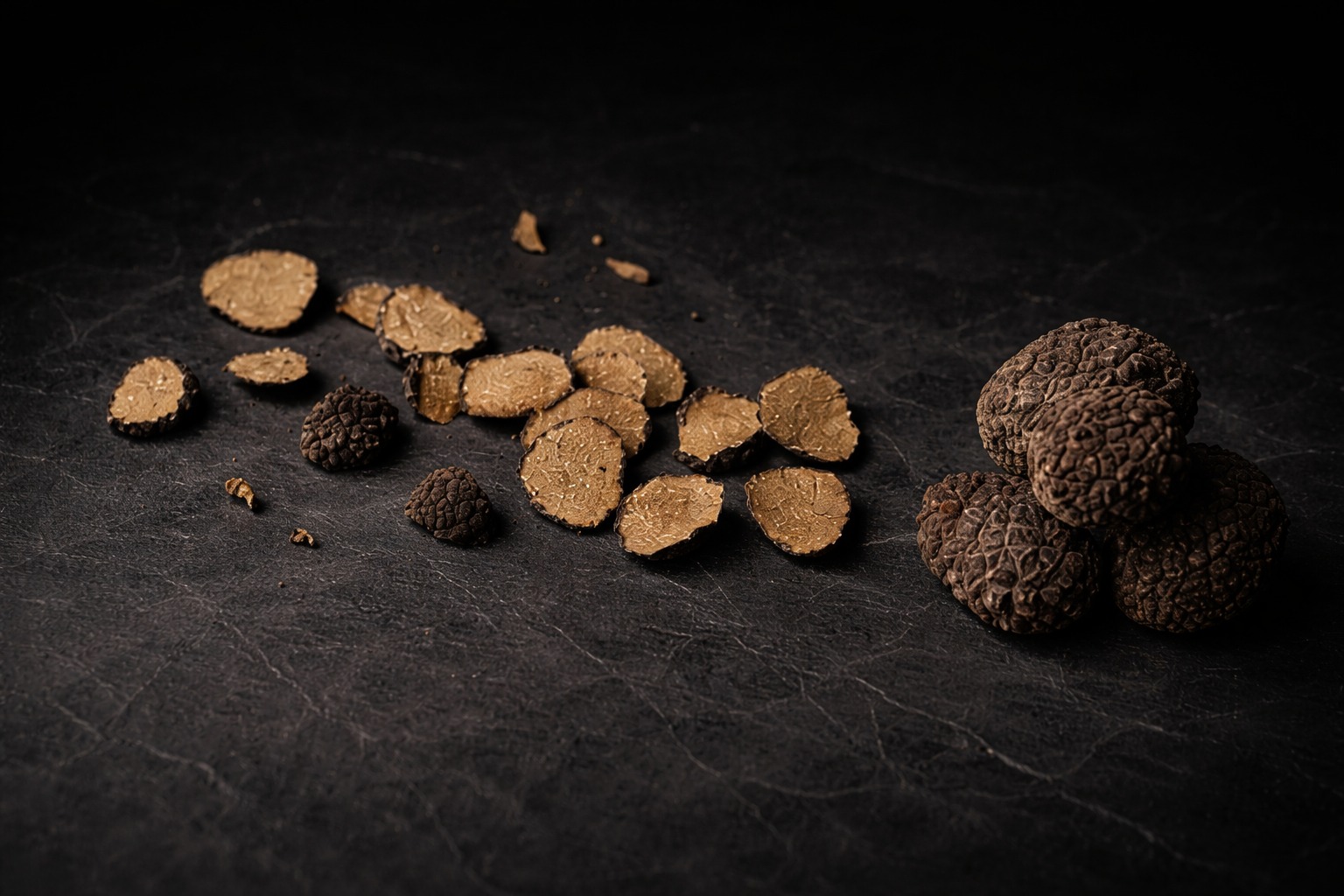
Black truffle is a rare type of subterranean fungus that grows underground near the roots of specific trees such as oak and hazelnut. Unlike mushrooms that grow above ground, truffles develop beneath the soil and require trained dogs to locate them.
The most famous variety is Tuber melanosporum, often called the Perigord black truffle, originating from France. Today, black truffles are also cultivated in Italy, Spain, and Australia.
Appearance and Characteristics
Black truffle has a rough, dark exterior with a textured surface resembling small pyramidal bumps. Inside, its flesh reveals a marbled pattern of dark brown and fine white veins.
Key characteristics:
Dark, uneven outer skin
Firm texture
Marbled interior
Strong, earthy aroma
As truffles mature, their aroma becomes more intense and complex.
Black Truffle vs White Truffle
While both are prized ingredients, black truffle differs from white truffle in several ways:
Aroma: Black truffle has a deep, earthy, slightly nutty scent, while white truffle is sharper and more pungent.
Flavor: Black truffle offers subtle bitterness and richness; white truffle leans more aromatic and garlicky.
Cooking Use: Black truffle can be lightly cooked; white truffle is typically shaved raw over dishes.
Availability: Black truffle season generally runs longer than white truffle.
Because of its versatility, black truffle is often preferred in steak and warm dishes.
Aroma and Flavor Profile
The defining feature of black truffle is its aroma. Even a small shaving releases an intense earthy fragrance that enhances the entire dish.
Flavor notes often described as:
Earthy
Nutty
Slightly woody
Deep umami
When combined with fat—such as butter, cream, or beef fat—the aroma becomes even more expressive. Fat acts as a carrier for truffle compounds, amplifying its presence in every bite.
This principle is similar to how premium fat enhances flavor in meat-based dishes, as explained in our article about Wagyu Tallow and Its Benefits.
Why Black Truffle Is So Expensive
Several factors contribute to the high price of black truffle:
It grows underground and cannot be farmed easily.
It requires specific soil and climate conditions.
Harvesting depends on trained animals.
Shelf life is short, requiring careful handling.
Because of its rarity and labor-intensive harvesting process, black truffle is considered a premium ingredient in global gastronomy.
Black Truffle in Fine Dining
In fine dining, black truffle is commonly paired with:
Steak and grilled beef
Pasta and risotto
Eggs
Potato dishes
Cream-based sauces
Its ability to enhance savory dishes makes it particularly suitable for steakhouse menus. When shaved over a perfectly grilled steak, black truffle adds an additional layer of aroma that elevates the entire experience.
Black Truffle and Steak: A Natural Pairing
The combination of high-quality beef and black truffle is a classic pairing. The fat in premium beef absorbs and carries the truffle aroma, intensifying its depth.
This synergy is especially powerful when paired with:
Wagyu
Dry-aged beef
Ribeye
Tenderloin
The result is not just flavor—but an aromatic experience.
If you’re interested in experiencing black truffle paired with premium steak, you can reserve your table here: Reserve at Meatguy Steakhouse via WhatsApp